Beauty of Joseon Relief Sun vs Purito Daily Soft Touch

Two of K-beauty’s most-recommended daily sunscreens, both fragrance-free SPF50+ PA++++ — so this isn’t about which protects better. Beauty of Joseon Relief Sun is a dewy, rice-and-probiotics SPF; Purito Daily Soft Touch is a ceramide-rich, semi-matte SPF. The choice is finish and skin type. And one shared honesty note up front: both use Tinosorb M, the filter behind “faint white cast on deeper tones,” so the “no white cast” marketing deserves a caveat. Here’s the full breakdown.
Last verified: June 2026. Sunscreen formulas and filter approvals vary by region — we re-check periodically.
The short answer (TL;DR)
- Beauty of Joseon Relief Sun is a dewy, lightweight chemical SPF50+ with rice extract, probiotics and niacinamide — best for dry-to-normal and sensitive skin that likes a hydrated, skincare-like finish.
- Purito Daily Soft Touch is a ceramide-rich chemical SPF50+ with a more semi-matte finish and five ceramides + centella — best for combination-to-oily skin that wants barrier support without dewiness.
- Buy Beauty of Joseon if you want a dewy daily SPF that disappears under makeup. Buy Purito if you want a less-shiny finish and ceramide barrier care in your sunscreen.
- Both are fragrance-free chemical sunscreens with modern, photostable filters — and both contain Tinosorb M, so neither is guaranteed cast-free on deeper skin tones. Test first if cast matters.
At a glance
| Beauty of Joseon Relief Sun | Purito Daily Soft Touch | |
|---|---|---|
| Protection | SPF50+ PA++++ (chemical) | SPF50+ PA++++ (chemical) |
| Filter type | Modern photostable filters incl. Tinosorb M | Modern photostable filters incl. Tinosorb S + Tinosorb M |
| Hero extras | Rice extract, probiotics (grain ferment), niacinamide | 5 ceramides, centella asiatica |
| Finish | Dewy, hydrating; skincare-like | Natural, semi-matte; barrier-supporting |
| White cast | Minimal on most; faint cast possible on deeper tones (Tinosorb M) | Brand claims none, but Tinosorb M can scatter — test on deeper tones |
| Best for | Dry-to-normal, sensitive; makeup wearers | Combination-to-oily; barrier-focused |
| Fragrance | Fragrance-free | Fragrance-free |
| Water resistance | Limited (everyday SPF, not sport) | Limited (everyday SPF, not sport) |
| Price | $ | $$ |
What each one is
Beauty of Joseon Relief Sun
A chemical (organic-filter) sunscreen built on a modern, photostable filter system — Ethylhexyl Triazone and Diethylhexyl Butamido Triazone (UVB), Diethylamino Hydroxybenzoyl Hexyl Benzoate (UVA) and Tinosorb M (broad UVA/UVB). Around the filters sit rice extract (a hero, rich in amino acids), niacinamide and grain ferment (“probiotics”), for a hydrating, cream-textured SPF that behaves like a light moisturizer. Reassuringly, independent labs in Korea and Spain have measured this formula at roughly SPF 52–63 — at or above its label.
- Pros: fragrance-free; modern broad-spectrum filters; dewy, hydrating finish; layers well under makeup; budget-friendly and widely available.
- Cons: faint white cast possible on deeper skin tones (Tinosorb M); dewy finish can feel too much for very oily skin; chemical filters (not for those who need mineral); not a strongly water-resistant sport SPF.
Purito Daily Soft Touch
Also a chemical sunscreen, with a similarly modern filter line-up — Ethylhexyl Triazone (UVB), Diethylamino Hydroxybenzoyl Hexyl Benzoate (UVA), plus Tinosorb S and Tinosorb M for broad-spectrum, photostable coverage. Its calling card is the supporting cast: five ceramides and centella asiatica, so the sunscreen doubles as a barrier-supporting, soothing step. The finish is a natural, semi-matte “soft touch” rather than dewy.
- Pros: fragrance-free; modern, very photostable filters; ceramide-rich (barrier support) plus calming centella; semi-matte finish that suits combination/oily skin.
- Cons: contains Tinosorb M, so the “no white cast” claim isn’t a guarantee on deeper tones (test first); pricier than Beauty of Joseon; chemical filters (not mineral); an everyday SPF, not water-resistant for sport.
How they differ where it matters
Finish — the real split. Beauty of Joseon is dewy and hydrating; Purito is semi-matte with a “soft touch.” Dry-to-normal skin tends to love the BoJ glow; combination-to-oily skin usually prefers Purito’s less-shiny finish, especially in heat.
Supporting ingredients. Both go beyond pure SPF, but in different directions. BoJ leans soothing-and-hydrating (rice, probiotics, niacinamide); Purito leans barrier-supporting (five ceramides) with centella to calm. If you want your sunscreen to double as ceramide care, Purito has the edge; if you want a comfortable dewy finish on dry skin, BoJ wins.
White cast — be honest about the claims. Purito markets a natural finish with no white cast, and chemical filters generally absorb clear. But both sunscreens contain Tinosorb M, the same light-scattering filter that gives Beauty of Joseon its known “faint cast on deeper skin tones” caveat. So treat any “no white cast” claim — Purito’s included — with healthy skepticism on deeper skin, and test before committing.
Filters and protection. Both are modern, photostable chemical systems offering broad-spectrum SPF50+ PA++++. Purito’s inclusion of Tinosorb S alongside Tinosorb M is a particularly robust broad-spectrum pairing. Practically, both protect well if you apply enough and reapply — that matters far more than small filter differences. (One caveat for US readers: K-beauty filters like the Tinosorbs aren’t all FDA-approved, so availability and formulas can differ by region — buy from reputable retailers.)
Water resistance. Neither is a strongly water-resistant sport sunscreen. For swimming or heavy sweat, use a dedicated sport SPF and reapply frequently.
Which should you buy?
- Dry-to-normal or sensitive skin, like a dewy finish → Beauty of Joseon Relief Sun.
- Combination-to-oily skin, want semi-matte → Purito Daily Soft Touch.
- You want ceramide barrier support in your SPF → Purito.
- You wear makeup over SPF and want it to disappear → Beauty of Joseon (dewy base) or Purito (semi-matte base) — match to your makeup finish.
- Deeper skin tone and cast-averse → test both; neither is guaranteed cast-free (both contain Tinosorb M).
- Need a mineral filter → neither; see a fragrance-free mineral option instead.
Can you use both?
Yes, and it’s a sensible rotation. Because they protect similarly but finish differently, many people use Beauty of Joseon in winter or on dry days and Purito in summer or when skin runs oilier — or BoJ on dry cheeks and Purito on an oily T-zone. Same job, different feel.
What people actually say
Relief Sun is one of the most-loved sunscreens in the K-beauty community: fragrance-free, non-stinging, weightless and invisible under makeup for most, with the recurring complaint being a faint cast on deeper tones and a finish that’s “too dewy” for very oily skin in heat. Purito Daily Soft Touch is praised for its comfortable semi-matte finish and ceramide-rich, barrier-friendly formula — sensitive and combination users like that it doesn’t sting or feel greasy — though some still report a slight cast (consistent with its Tinosorb M content), and it costs a little more. Our read: BoJ is the easy pick for dry-to-normal and sensitive skin that likes glow; Purito is the better choice for combination-to-oily, barrier-focused skin that wants less shine. (User reports, not guarantees — your skin may differ.)
What they won’t do / who should skip
- Neither is a mineral sunscreen. Both use chemical (organic) filters. If you specifically need zinc or titanium, skip both.
- “No white cast” isn’t a promise on deeper skin. Both contain Tinosorb M, which can scatter light — test on deeper tones before committing.
- Neither is fungal-acne (Malassezia) certified. Very breakout-prone skin should patch-test.
- Neither is a sport SPF. Limited water resistance — don’t rely on them for swimming or heavy sweat.
- You only get the labelled protection if you apply enough (about a quarter teaspoon for the face) and reapply every two hours of sun exposure. Sunscreen is the single most important anti-aging and skin-cancer-prevention step — under-applying is the most common reason it underperforms. This isn’t medical advice; for a diagnosed photosensitivity or skin condition, see a dermatologist.
The verdict & where to buy
If your skin is dry-to-normal or sensitive and you like a dewy, skincare-like finish, get Beauty of Joseon Relief Sun — it’s cheaper and the more universal crowd-pleaser. If your skin is combination-to-oily or you want ceramide barrier support with a semi-matte finish, get Purito Daily Soft Touch. Both are fragrance-free, modern-filter SPF50+ — and on deeper skin tones, test either first, since both contain Tinosorb M. Prices vary by retailer and region; the buttons below route you to the best option for your country.
 Best Dewy / Everyday
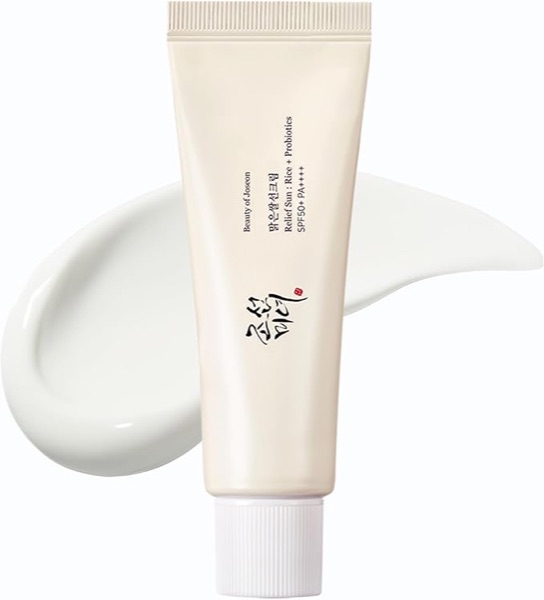
 Beauty of Joseon Relief Sun: Rice + Probiotics SPF50+ PA++++
Purito Daily Soft Touch Sunscreen SPF50+ PA++++
FAQ
Beauty of Joseon or Purito — which sunscreen is better? Neither is objectively better; both are fragrance-free chemical SPF50+ PA++++. Beauty of Joseon Relief Sun has a dewy, skincare-like finish best for dry-to-normal skin; Purito Daily Soft Touch has a more semi-matte, ceramide-rich finish that suits combination-to-oily skin. Pick by finish and skin type.
What’s the difference between Beauty of Joseon Relief Sun and Purito Daily Soft Touch? Both are chemical sunscreens with modern, photostable filters. Beauty of Joseon leads with rice extract, probiotics and niacinamide for a dewy finish; Purito leads with five ceramides and centella for a more semi-matte, barrier-supporting finish. The main split is dewy vs semi-matte and the supporting ingredients.
Do Beauty of Joseon and Purito sunscreens leave a white cast? Both are designed to absorb without a cast, and on most skin tones they do. But both contain Tinosorb M, a filter that scatters light and can leave a faint cast on deeper skin tones — so treat any brand “no white cast” claim with caution and test before committing if cast bothers you.
Which is better for oily or combination skin? Purito Daily Soft Touch — its semi-matte, ceramide-rich finish tends to suit combination and oily skin better, while Beauty of Joseon’s dewy finish can feel like much in heat. Both are lightweight everyday face sunscreens, not water-resistant sport SPFs.
Are both sunscreens fragrance-free and good for sensitive skin? Yes — both are fragrance-free, which is why they’re popular for sensitive, barrier-compromised skin. Neither is certified fungal-acne-safe, so very breakout-prone skin should patch-test, and anyone needing a mineral (zinc/titanium) filter should look elsewhere, as both are chemical.
Sources: Beauty of Joseon Relief Sun — ingredient analysis (INCIDecoder) · Purito Daily Soft Touch Sunscreen — ingredient analysis (INCIDecoder) · Tinosorb M (Methylene Bis-Benzotriazolyl Tetramethylbutylphenol) — ingredient overview (INCIDecoder)
Related: Best Korean Sunscreens for Sensitive Skin (Fragrance-Free) · Beauty of Joseon vs Round Lab Sunscreen · Beauty of Joseon Relief Sun review · The Fragrance-Free Korean Skincare Routine for Sensitive Skin