
Beta-Glucan vs Hyaluronic Acid: Which for a Damaged Barrier?


Hyaluronic acid has been skincare’s default hydrator for a decade, but beta-glucan is closing in fast — enough that you’ll see it called “the new hyaluronic acid.” If your skin is just a little dry, the difference barely matters. If your barrier is actually compromised — tight, stinging, reactive — it matters a lot, because only one of these does much to calm and repair, not just hydrate.
Here’s how they really compare, which one wins for a damaged barrier, and why the smartest answer is often to use both.
Key takeaways
- Both hydrate, but differently: hyaluronic acid pulls water into the skin; beta-glucan holds water and forms a soothing, barrier-supporting film on top.
- For a damaged barrier, beta-glucan edges it — it’s genuinely calming and supports repair, while HA is mostly a humectant.
- Hyaluronic acid can backfire in dry air. If it’s not sealed with a moisturizer, low-weight HA can draw moisture out of the skin in low humidity.
- You don’t have to choose — they layer beautifully: HA for deep hydration, beta-glucan to soothe and lock it in.
- Neither replaces ceramides. A truly damaged barrier still needs a ceramide cream on top; these serums sit underneath it.
The short answer
If you want pure, lightweight hydration and your barrier is healthy, hyaluronic acid is a cheap, reliable pick. If your skin is sensitive, reactive, or repairing, beta-glucan is the better single choice because it soothes as it hydrates. For a barrier that’s genuinely struggling, layer HA then beta-glucan under a ceramide cream and you get the best of both.
Beta-glucan vs hyaluronic acid at a glance
| Beta-glucan | Hyaluronic acid | |
|---|---|---|
| How it hydrates | Holds water and forms a soothing film on the surface | Draws water into deeper layers; holds many times its weight |
| Soothing / repair | Strong — calms inflammation, supports the barrier | Mild — mainly hydration, little repair |
| Irritation risk | Very low | Low, but can pull moisture from skin in dry air if unsealed |
| Texture | Cushiony, slightly richer | Light, watery |
| Best for | Sensitive, reactive, barrier-damaged skin | Quick plumping hydration on normal-to-dry skin |
| Price | Affordable | Very affordable |
What each one actually does
Hyaluronic acid is a humectant: it grabs water and holds a lot of it — often quoted as up to 1,000 times its weight — pulling hydration into the skin to plump and smooth. The catch is that in a dry environment, lighter-weight HA can draw moisture from the deeper skin instead of the air, which is why it should always be applied to damp skin and sealed with a moisturizer.
Beta-glucan is a humectant too, but it does more. It holds water while forming a thin, soothing film on the surface, and it’s genuinely calming — useful for redness, sensitivity and a barrier under stress. You’ll also see claims that it stores more water and penetrates deeper than HA; that figure gets repeated a lot by beta-glucan brands, so treat it as directional rather than gospel. What’s not in doubt is the soothing, barrier-friendly behaviour.
The picks
The beta-glucan pick
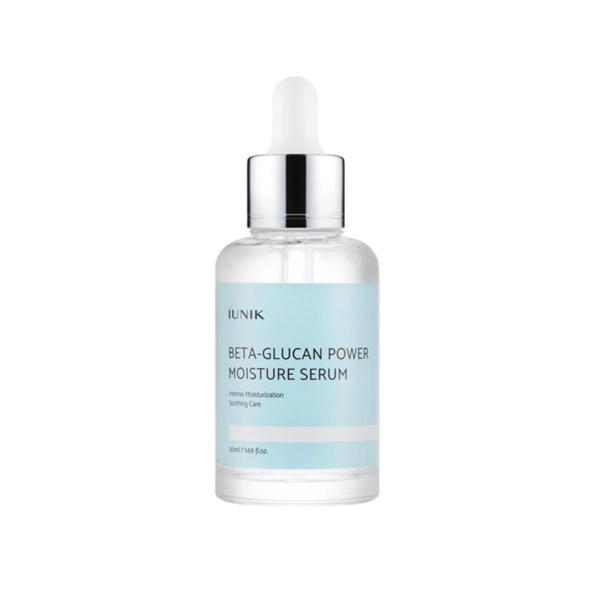 The Beta-Glucan Pick
 iUNIK Beta Glucan Power Moisture Serum
A high-concentration beta-glucan serum that’s become the default recommendation in K-beauty for a reason: deeply hydrating, soothing, and gentle enough for sensitive and fungal-acne-prone skin. If you’re trying beta-glucan for the first time, start here.
The hyaluronic acid pick
The Ordinary Hyaluronic Acid 2% + B5
The benchmark HA serum — multiple molecular weights plus vitamin B5, at a price that’s hard to argue with. Apply it to damp skin and always seal it with a moisturizer, especially in dry or air-conditioned air.
Can you use beta-glucan and hyaluronic acid together?
Yes — and for a compromised barrier, that’s usually the best move. They hydrate by different routes, so layering them maximises moisture at more than one level, and both are anti-inflammatory.
The order that works: apply your hyaluronic acid first onto slightly damp skin, follow with beta-glucan to hold that water in and soothe, then seal everything with a ceramide cream. That last step is what turns two humectants into lasting barrier repair.
Which is better for a damaged barrier?
For repair specifically, beta-glucan wins — it calms inflammation and supports the barrier in a way pure HA doesn’t. But neither serum rebuilds a barrier on its own; they hydrate and soothe, while the actual lipid repair comes from the cream on top. So the realistic routine is a beta-glucan (or beta-glucan + HA) layer under a ceramide moisturizer like this one:
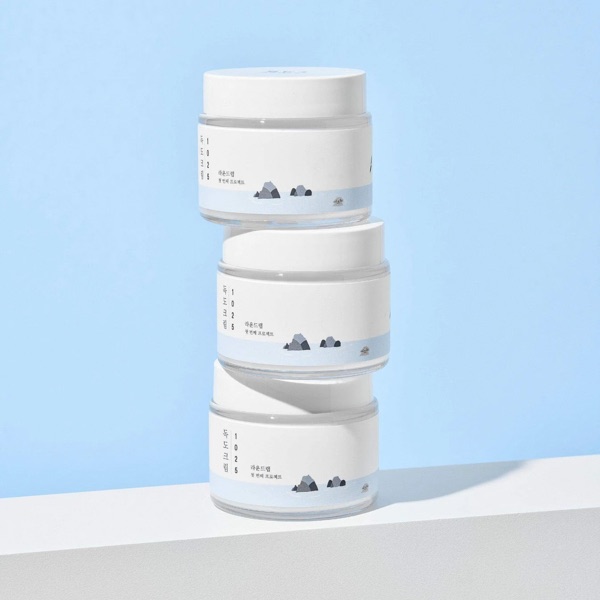 Best for Sealing in Repair
 Round Lab 1025 Dokdo Cream
For the full lineup of creams that do the sealing-and-repairing, see our guide to the best K-beauty barrier repair creams and the best ceramide serums for barrier repair.
FAQ
Is beta-glucan better than hyaluronic acid?
For sensitive, reactive or barrier-damaged skin, beta-glucan is the stronger single ingredient because it soothes and supports the barrier as well as hydrating. For straightforward plumping hydration on healthy skin, hyaluronic acid does the job for less. Neither is universally “better” — it depends on what your skin needs.
Can you use beta-glucan and hyaluronic acid together?
Yes. They complement each other, so layering them gives deeper, longer-lasting hydration than either alone. Apply HA first on damp skin, then beta-glucan, then a moisturizer to seal.
Which goes on first, beta-glucan or hyaluronic acid?
Apply hyaluronic acid first onto damp skin to draw water in, then beta-glucan to hold it and calm the skin, and finish with a cream. As a general rule, thinnest to thickest.
Is beta-glucan good for sensitive or acne-prone skin?
It’s one of the gentlest hydrators available and is well tolerated by sensitive, reactive and many fungal-acne-prone routines. As always, patch-test and check the full ingredient list.
Does hyaluronic acid dry out your skin?
It can, in low humidity, if it’s left unsealed — lighter HA may pull water from deeper skin rather than the air. Applying it to damp skin and locking it in with a moisturizer prevents this.
Is beta-glucan really “the new hyaluronic acid”?
It’s having a moment because it hydrates and soothes, which suits the current focus on barrier health. It’s not replacing HA so much as joining it — the two work best as a pair.
The bottom line
Hyaluronic acid is a fine, cheap hydrator, but for skin that’s sensitive or repairing, beta-glucan is the more useful single ingredient because it calms as it hydrates. The strongest routine doesn’t pick a side: layer HA and beta-glucan, then seal with a ceramide cream, and you cover hydration, soothing and barrier repair in three steps.