
Low-pH Cleansing Explained (and Why It Matters)


A low-pH cleanser is one formulated to roughly pH 4.5–6.5, close to your skin’s own slightly acidic surface — so it cleans without stripping the protective “acid mantle.” That single change is one of the most underrated barrier upgrades in skincare: high-pH soaps clean by forcing skin alkaline, which it then spends hours recovering from. Here’s the science, plainly — what pH means for skin, why it matters, who benefits, and how to choose.
Last verified: June 2026. This is general skincare information, not medical advice — see a dermatologist for persistent irritation or a damaged barrier.
What “pH” actually means for skin
pH is just a 0–14 scale for how acidic or alkaline something is: 7 is neutral, below 7 is acidic, above 7 is alkaline. Pure water sits at 7; traditional soap lands around 9–10.
Your skin’s surface isn’t neutral — it’s mildly acidic, around pH 4.5–5.5. That acidity is deliberate. It’s maintained by sweat, sebum and the breakdown of skin lipids, and it forms what’s called the acid mantle: a thin protective film across the outermost layer of skin.
What the acid mantle does
The acid mantle isn’t a marketing term — it’s a real, functional part of how skin protects itself. Its job:
- Keeps the barrier intact. The enzymes that build and maintain healthy skin lipids (ceramides) work best in an acidic environment.
- Defends against bacteria. A slightly acidic surface discourages the growth of unwanted microbes while supporting a healthy skin microbiome.
- Holds moisture in. A functioning acid mantle helps skin retain water, so it feels comfortable rather than tight.
When the acid mantle is disrupted, skin gets more reactive, drier and more prone to irritation — and a compromised barrier never quite gets the chance to recover.
Why high-pH and soap cleansers disrupt the barrier
Traditional soap and many foaming face washes are alkaline (high-pH, often around 9–10). They cut through oil very effectively — that’s exactly the problem. In doing so, they:
- Strip the acid mantle, pushing skin’s surface pH up sharply.
- Disrupt the lipid-building enzymes that need an acidic environment to work.
- Force skin into recovery mode. Research on skin-surface pH shows it can take hours for skin to bring its pH back down to baseline after an alkaline wash.
Do that twice a day, every day, and a fragile barrier is living in a near-constant state of recovery. That’s why over-washing with a stripping cleanser is one of the most common reasons a barrier won’t heal — and why the fix is often as simple as changing your cleanser.
That tight, squeaky feeling after washing? It isn’t the feeling of “clean.” It’s the feeling of a stripped barrier. Comfortable, slightly hydrated skin is the goal.
What “low-pH” means in practice
A low-pH cleanser is formulated to sit close to skin’s natural acidity — roughly pH 4.5–6.5, the range dermatologists consider barrier-friendly. It still cleans (mild surfactants lift away sebum, sweat, sunscreen and pollution), but it does so without spiking skin alkaline, so there’s no pH crash to recover from afterward.
| Traditional soap / high-pH foam | Low-pH cleanser | |
|---|---|---|
| Typical pH | ~9–10 (alkaline) | ~4.5–6.5 (close to skin) |
| How it cleans | Strips oils aggressively | Lifts oil and grime gently |
| Effect on acid mantle | Disrupts it; hours to recover | Leaves it largely intact |
| After-feel | Tight, squeaky, sometimes stinging | Comfortable, slightly hydrated |
| Best for | Very little, honestly | Most skin, especially sensitive/dry |
A quick honesty note: most K-beauty cleansers don’t print an exact pH on the box, and “low-pH” isn’t a regulated term. A handful of formulas publish a number (COSRX’s gel is cited at around 5.3), but for the rest you’re relying on the brand’s positioning and how your skin feels. The after-feel test is your most reliable real-world check.
Who benefits most
Honestly? Almost everyone benefits from not stripping their skin twice a day. But it matters most for:
- Sensitive and reactive skin — less likely to sting, flush or feel tight.
- Dry and dehydrated skin — keeps the moisture-retaining acid mantle intact.
- Eczema-prone or barrier-damaged skin — this is the single most protective swap you can make at the sink.
- Acne-prone skin — counterintuitively, stripping the barrier tends to make breakouts and irritation worse; a gentle low-pH cleanse (sometimes with a mild BHA) is the better default. See our oily and acne-prone routine.
- Anyone whose face feels tight after washing — that’s the clearest sign your current cleanser is too harsh.
Who can be more relaxed about it? If you have resilient, balanced skin that has never felt tight or irritated, your barrier may tolerate a higher-pH wash fine. But there’s little downside to a gentle cleanser either way.
How to choose a low-pH cleanser
Match the format to your skin, then check for irritants:
- Most skin types, daily use → a low-pH gel. Cleans well, rinses clean, and suits normal, combination and oily skin. The COSRX Low pH Good Morning Gel is the default pick (note: it contains tea tree oil, so it isn’t fragrance-free).
- Sensitive skin that wants zero essential oils → a fragrance-free gel. The Beauty of Joseon Green Plum is a calm, fragrance-free option (with no BHA/AHA, so no exfoliation — just a gentle clean).
- Reactive or dry skin → a creamy whip or cream cleanser. Gentler than a gel; look for one built on soothing ingredients like panthenol and madecassoside.
- You wear SPF or makeup → add an oil cleanser first. A low-pH gel alone won’t melt off sunscreen; double cleanse (oil first, then gel). See our double cleansing guide.
What to scan the label for: fragrance and essential oils (the most common irritants in otherwise gentle cleansers), and sulfates like SLS if your skin is reactive. And remember the after-feel test — comfortable, not squeaky.
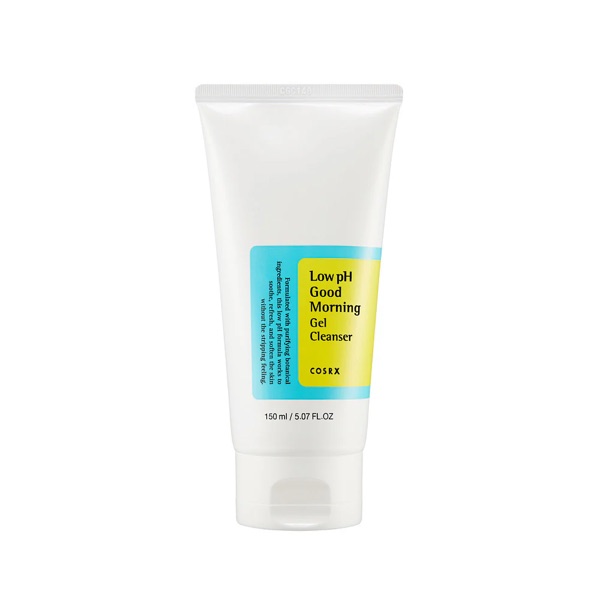 Best Everyday Low-pH Gel
 COSRX Low pH Good Morning Gel Cleanser
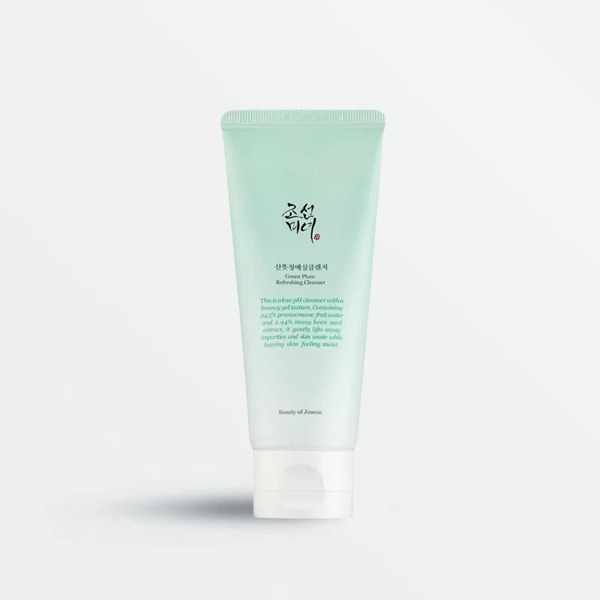 Best Fragrance-Free Low-pH Gel
 Beauty of Joseon Green Plum Refreshing Cleanser
For the full line-up across skin types — gels, creamy whips and oils — see our best gentle Korean cleansers for a compromised barrier.
How low-pH cleansing fits the rest of your routine
Cleansing is step one — get it wrong twice a day and nothing else in your routine can keep up. After a gentle low-pH cleanse, follow (on slightly damp skin) with the rest of your barrier routine: a hydrating toner or essence, treatments, then a ceramide serum and a barrier cream to seal everything in. In the morning, finish with SPF.
FAQ
What is a low-pH cleanser?
A low-pH cleanser is one formulated to roughly pH 4.5–6.5 — close to your skin’s own slightly acidic surface. It cleans away oil and grime without pushing your skin alkaline, so the acid mantle stays intact and your barrier doesn’t have to spend hours recovering after every wash.
Why is low-pH cleansing better for your skin?
Because your skin’s surface is naturally acidic (around pH 4.5–5.5), and that acidity protects the barrier and microbiome. High-pH soaps strip it and force skin into recovery; low-pH cleansers clean while staying close to skin’s natural state, so there’s no pH spike to bounce back from. The payoff is less tightness, dryness and irritation.
How do I know if my cleanser is high-pH?
The simplest test is how your skin feels: if it’s tight, squeaky or “clean to the point of stinging” after washing, the cleanser is likely too alkaline. Traditional bar soaps and many foaming face washes are high-pH. A few brands publish their pH; low-pH gels and creamy whips are the safer default.
Who benefits most from a low-pH cleanser?
Almost everyone, but especially people with sensitive, dry, eczema-prone or barrier-damaged skin, and anyone whose face feels tight after cleansing. It’s also the smart default for acne-prone skin, since stripping the barrier often makes breakouts and irritation worse, not better.
Can low-pH cleansers still clean properly?
Yes. Modern low-pH cleansers use mild surfactants that lift away sebum, sweat and pollution effectively — they just don’t strip the skin raw. The “squeaky-clean” feeling people associate with deep cleaning is actually a stripped barrier, not a cleaner face.
The bottom line
Low-pH cleansing is the cheapest, easiest barrier upgrade most people can make. Your skin is meant to be slightly acidic; high-pH soaps strip that protective acid mantle and force skin into hours of recovery, twice a day. Swap to a gentle low-pH cleanser (gel for most, a creamy whip for reactive or dry skin), add an oil cleanser only when you’re wearing SPF or makeup, and let the squeaky-clean feeling go. Start with the best gentle Korean cleansers.
Related
- Best Gentle Korean Cleansers for a Compromised Barrier (Low-pH)
- Double Cleansing: What It Is and How to Do It
- COSRX Low pH vs Beauty of Joseon Green Plum Cleanser
- Best K-Beauty Barrier Repair Creams for Sensitive Skin
- The Fragrance-Free Korean Skincare Routine for Sensitive Skin